


Intervention 1
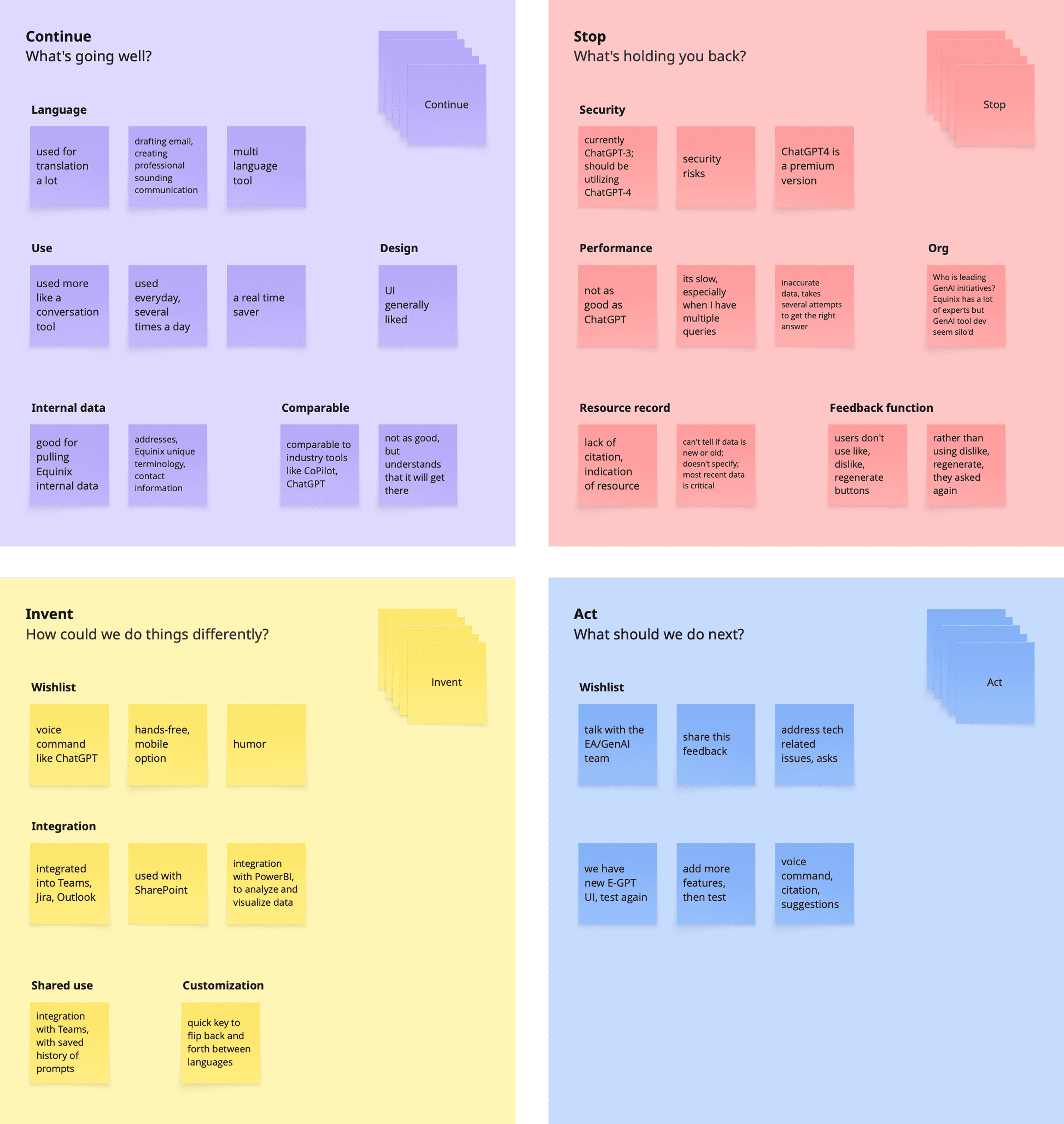
Ran stakeholder design workshops to establish shared vocabulary.
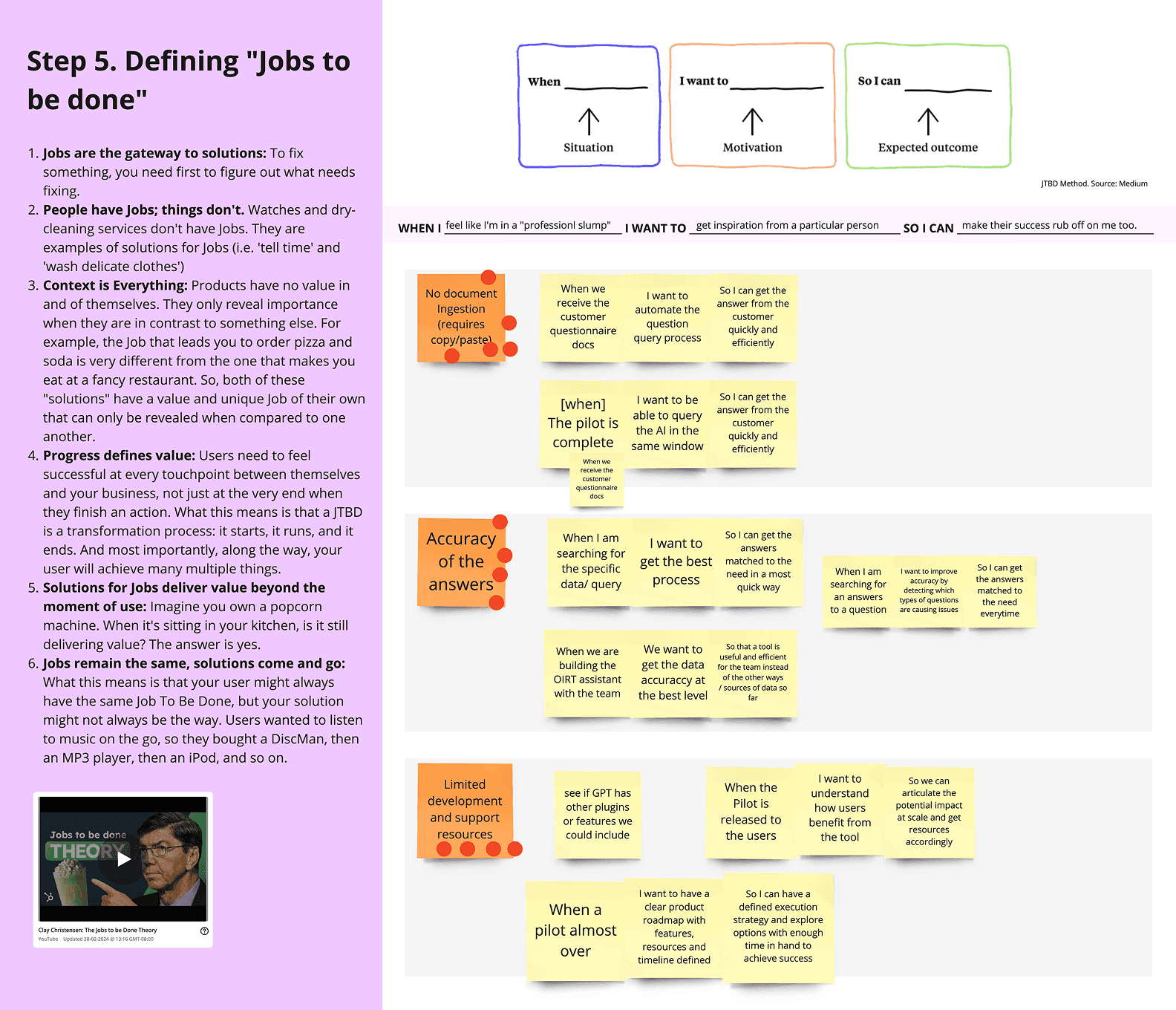
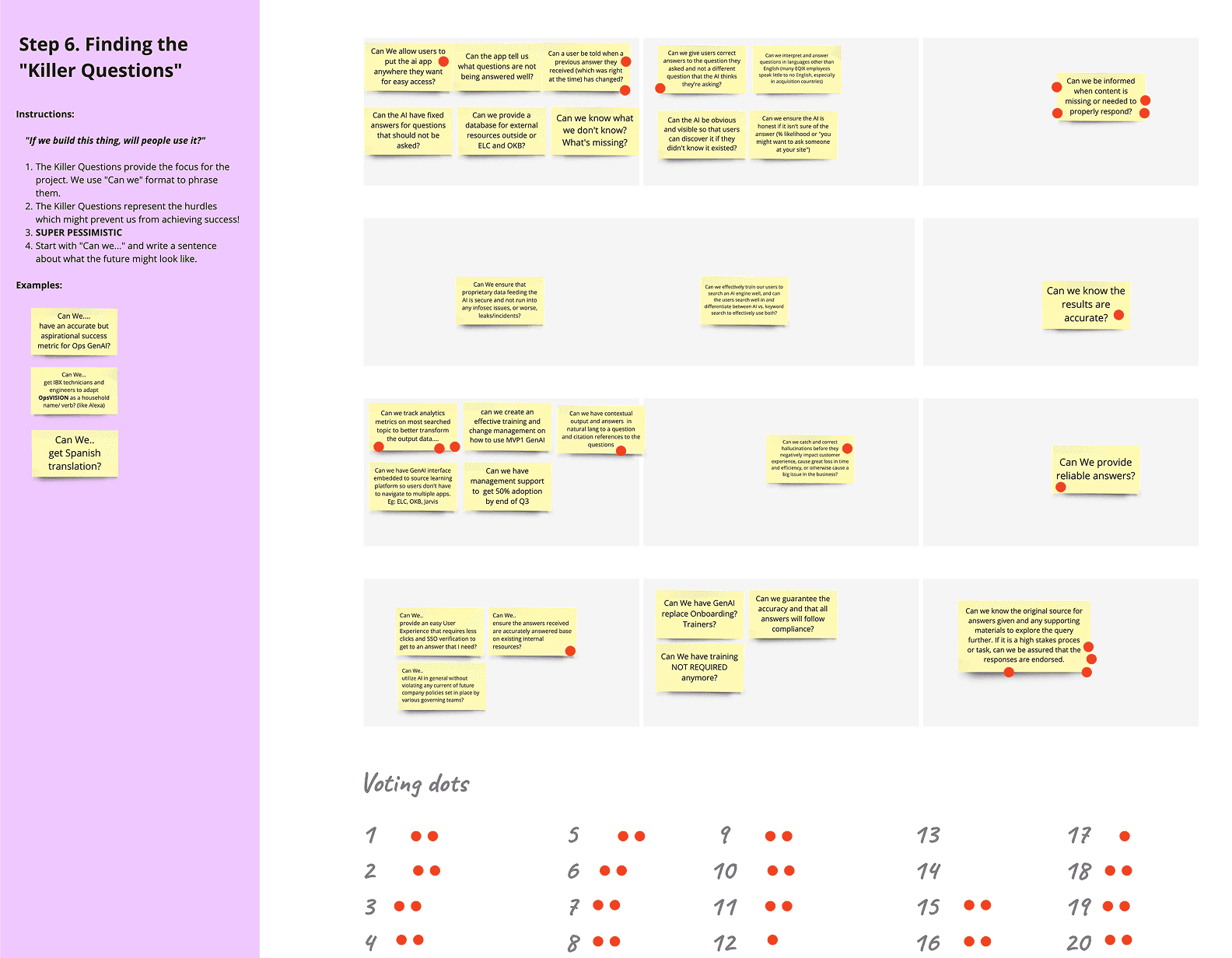
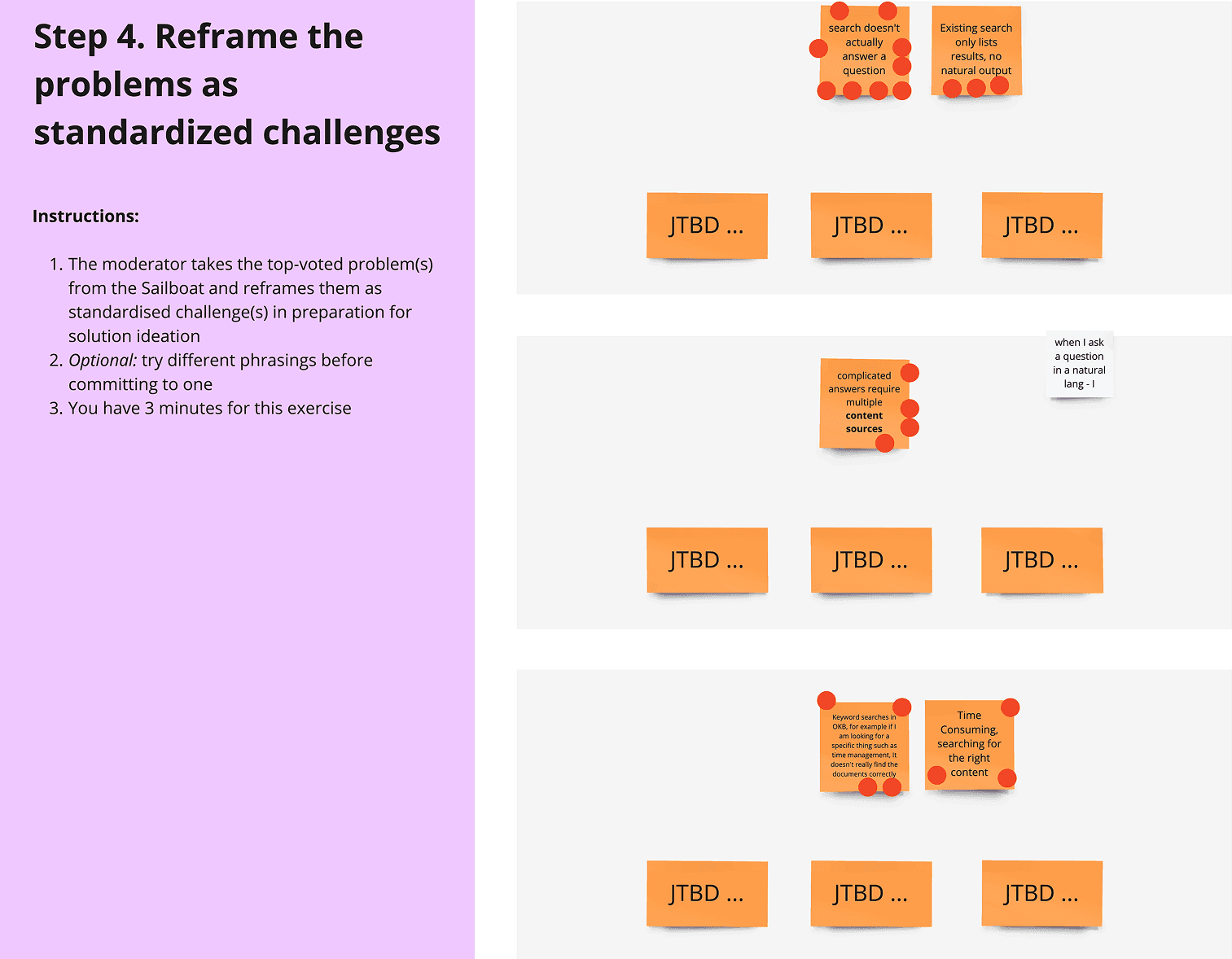
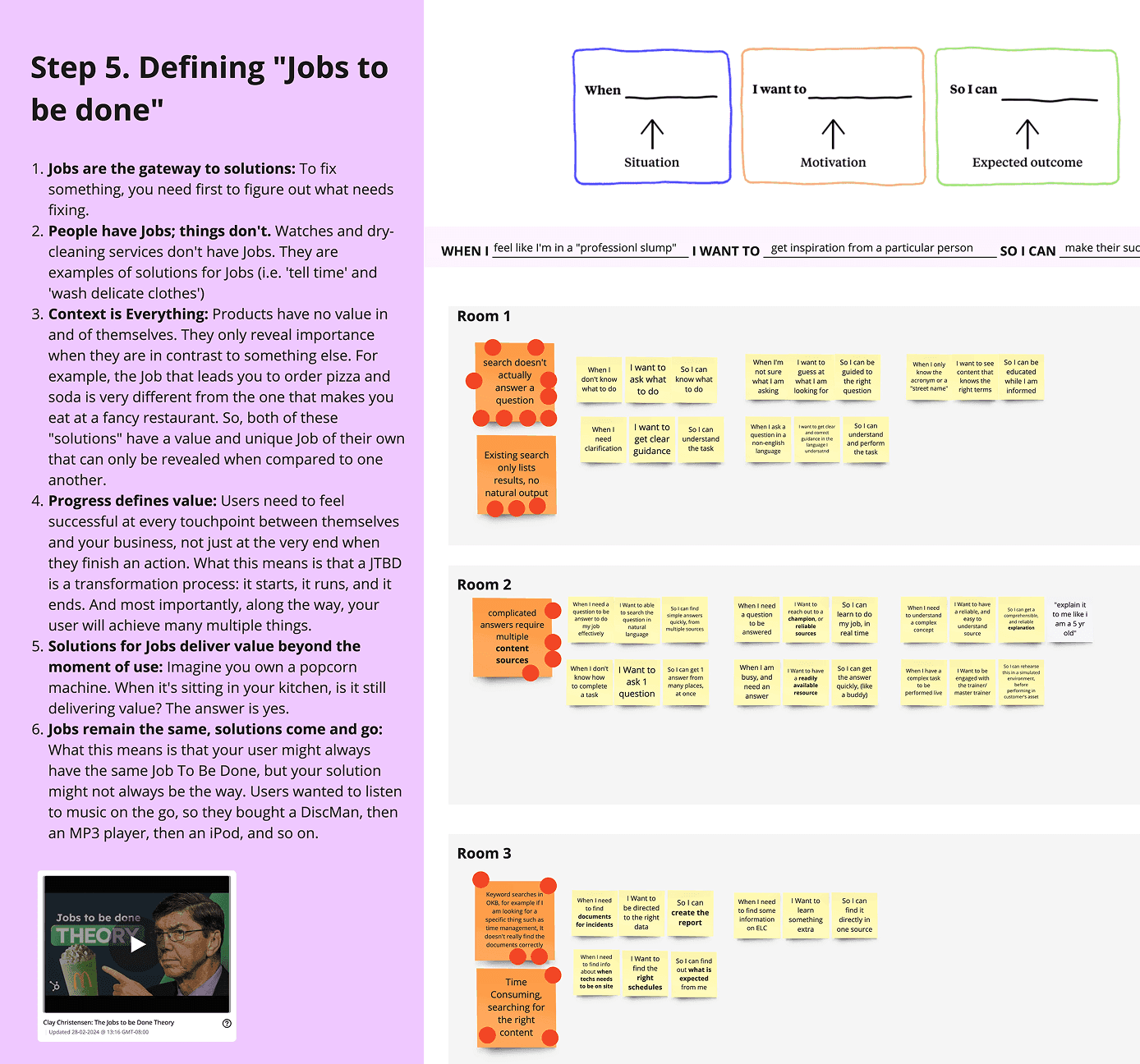
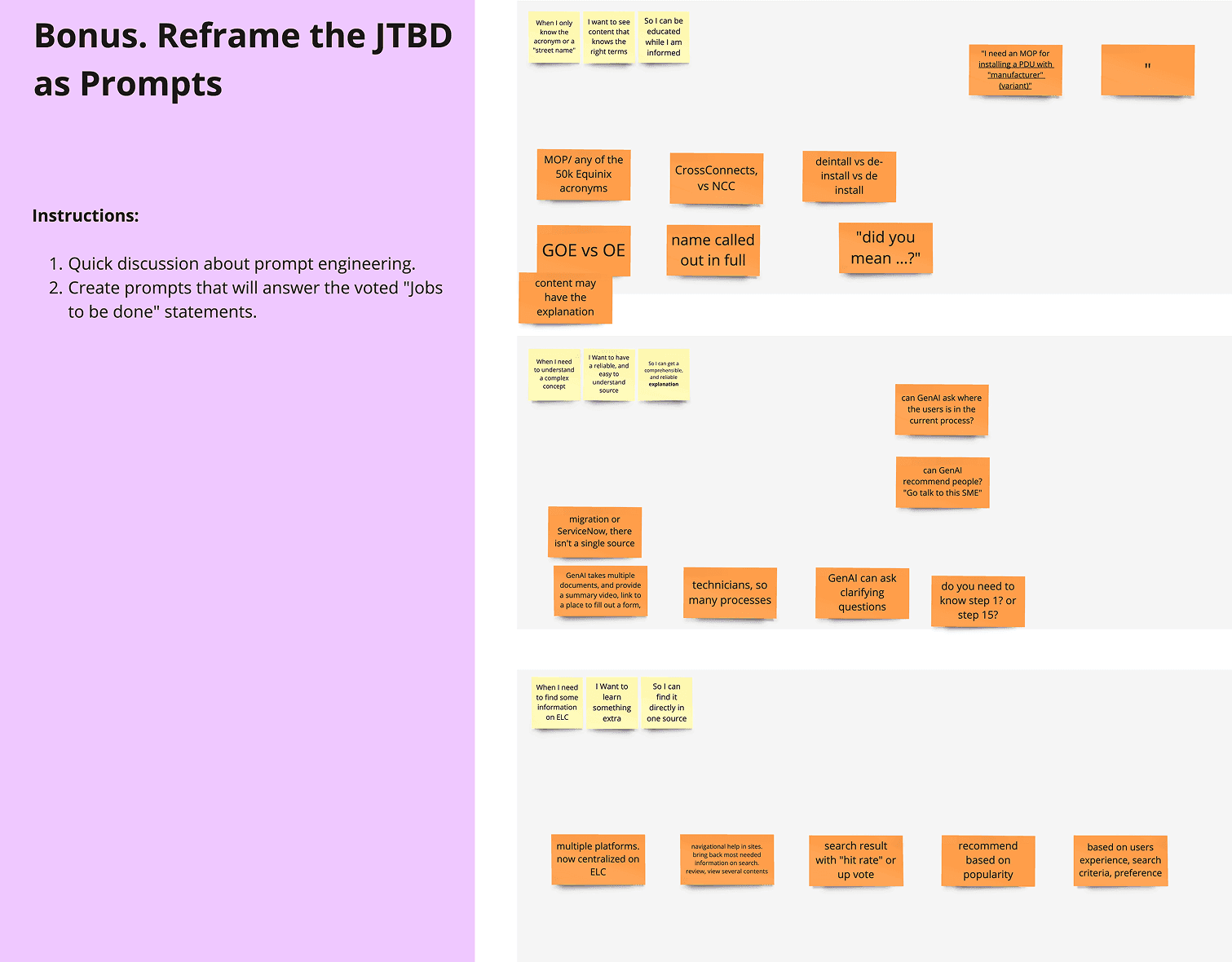
Jung-Soo Choi, Sal Sidani, and I co-facilitated three workshops across Sales, Operations, and IT. We used Jobs-to-be-Done to align on what employees needed from a GenAI tool, and Killer Questions to surface assumptions and risks across each business unit. The workshops produced the first shared problem statement across the teams.
Intervention 2
Designed domain routing as invisible infrastructure.
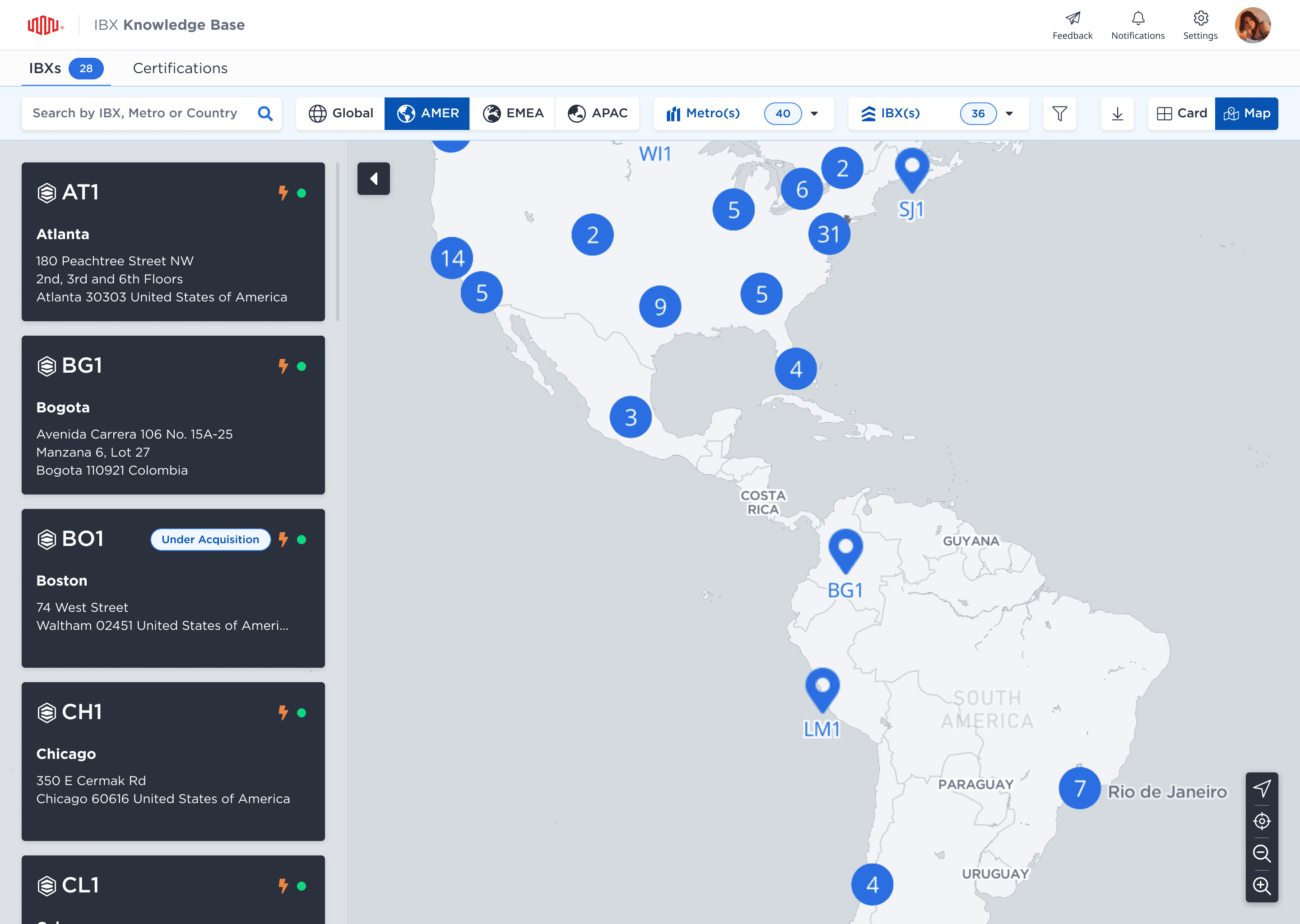
I designed the user-facing interaction model. Srivats engineered the routing underneath. Sales queries went to the sales pilot. HR queries to HR. Multi-domain questions pulled from multiple APIs, with information consolidated into a single response. The six pilots stayed alive underneath as domain APIs.
Intervention 3
Built a custom design system for AI-native interaction patterns.
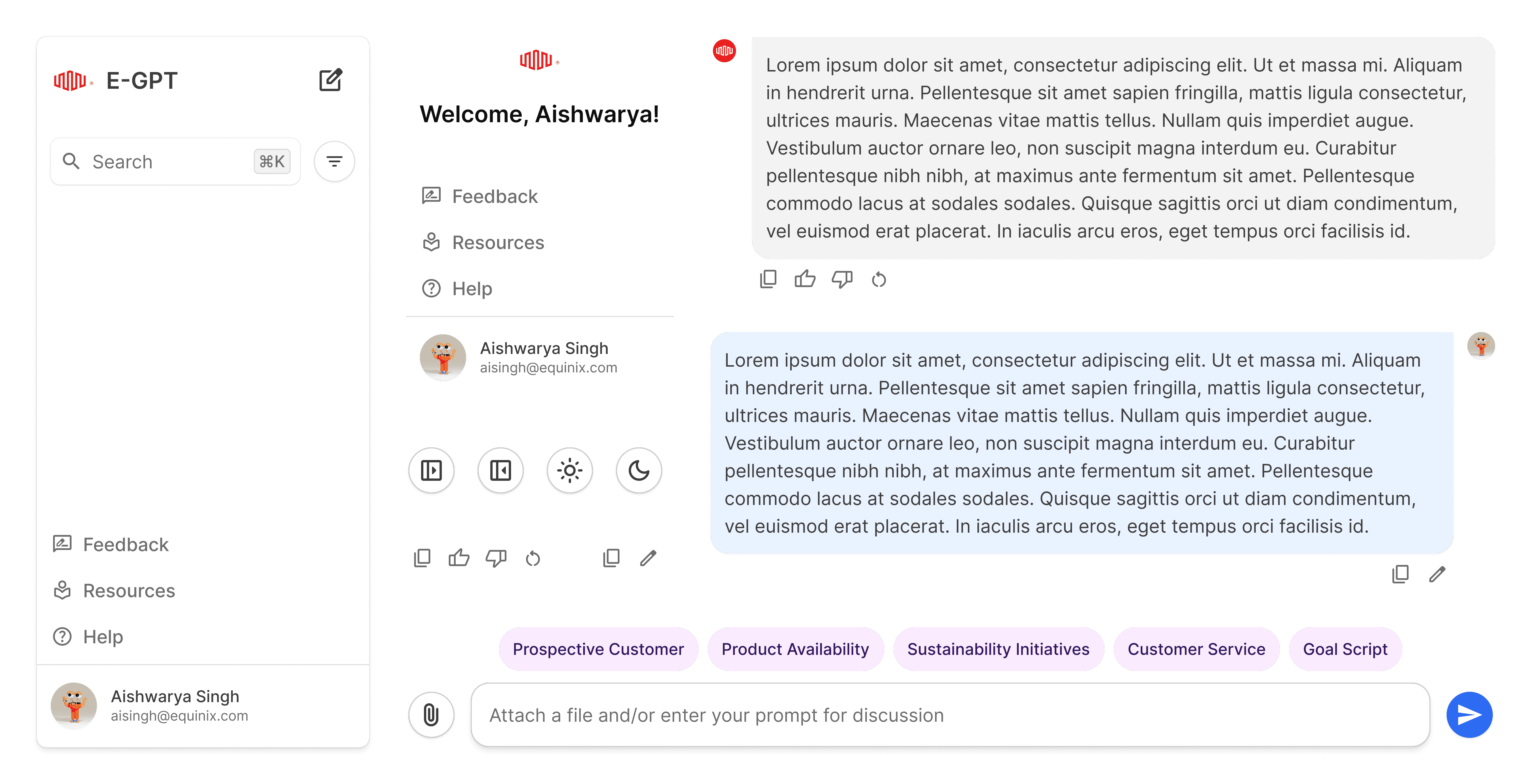
Sal Sidani and I built a design system for conversational AI. I created AI-native components that the existing library didn't cover. Sal reviewed for consistency against the broader Equinix visual language. These patterns needed their own foundation, built once.
Intervention 4
Added guided prompts to solve the blank-page problem.
Early usability sessions showed that employees who hadn't used GenAI tools before didn't know how to start. A blinking cursor produced hesitation. I designed guided prompts: role-based, activity-based, and generic starters. Users could edit, ignore, or send them.
Intervention 5
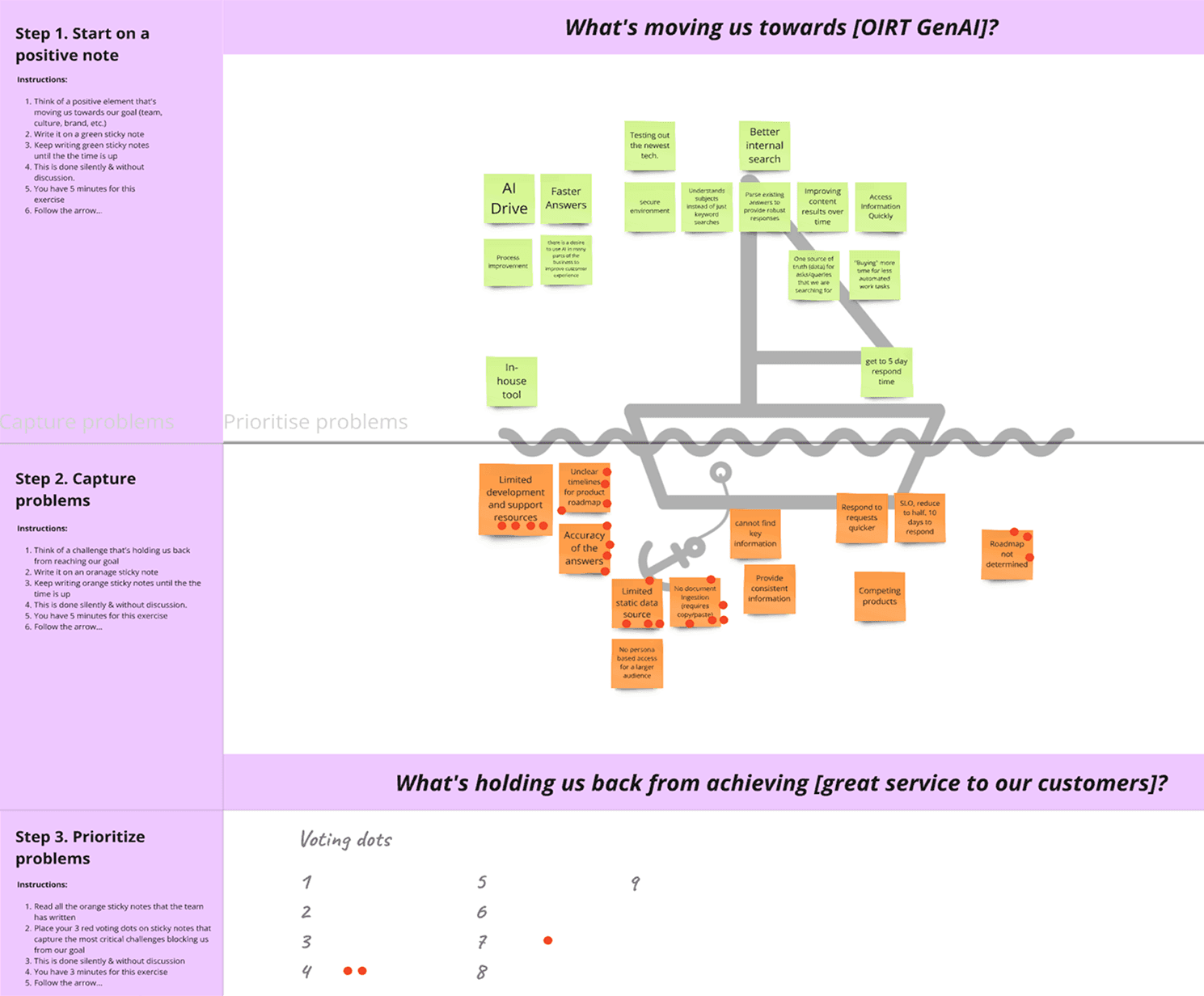
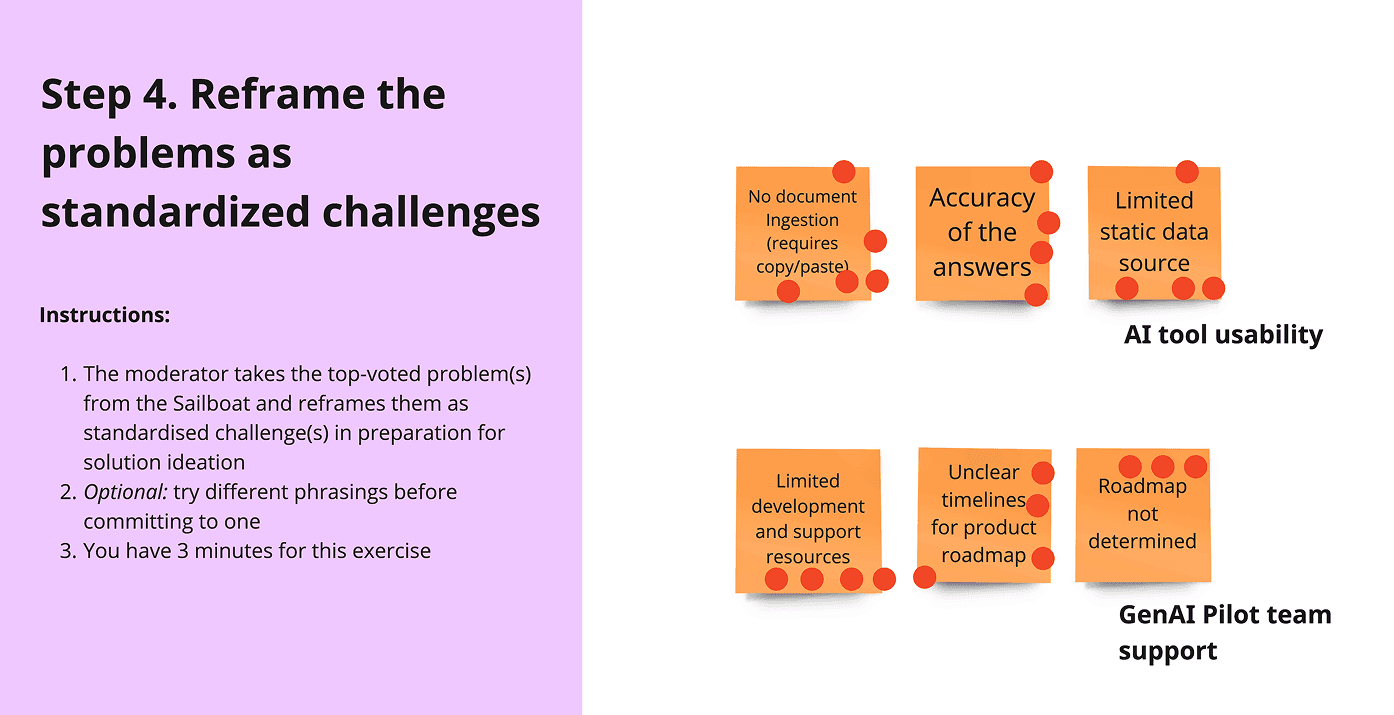
Ran sentiment analysis as validation and alignment.
I designed a mixed-methods study, conducted with six active beta users of E-GPT across EMEA, APAC, and AMER. Jung-Soo and I co-ran interviews, combining System Usability Scale (SUS) scoring before and after the redesign with open-ended questions on satisfaction, value, and usage. I translated findings into design revisions.