






Intervention 1
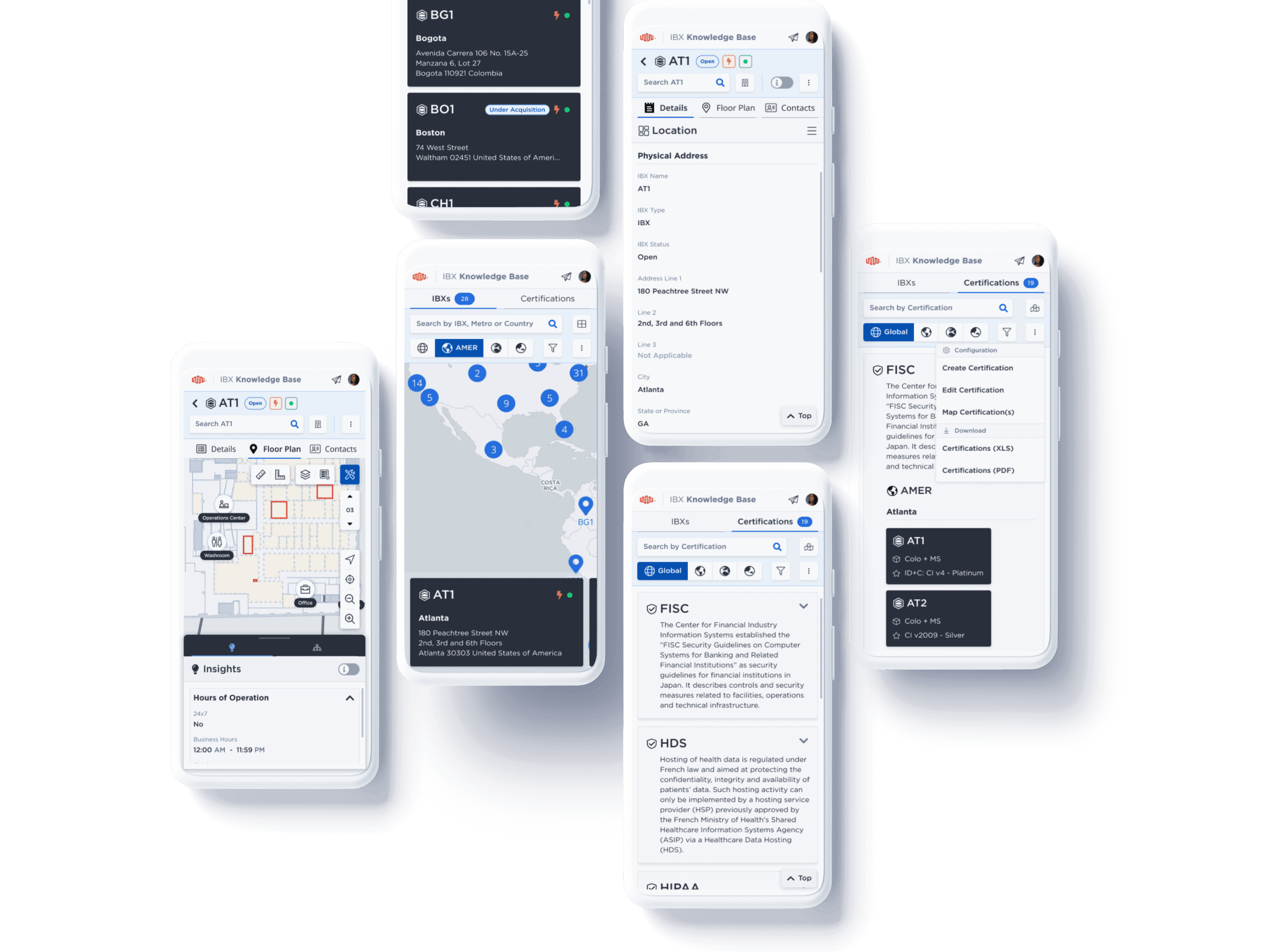
Designed mobile-first because the tool had to work outside the desk.
The Knowledge Base served sales teams, operations, compliance, and site teams working across offices, meetings, and on-site environments. None of those contexts was desk-first. The legacy systems were. Designing mobile-first forced every decision through the lens of the smallest surface area first. Content hierarchy had to hold before any screen was wide enough to hide it.
Intervention 2
Built the information hierarchy around who needed what, and when.
The system had to surface certifications, emergency protocols, and hundreds of site attributes without overwhelming users. Ted Yang and Shagun Kakkar brought the operational and systems context: which users needed which information, and in what sequence. I structured the hierarchy around those scenarios, prioritizing attributes by frequency of access, task criticality, and role.
Intervention 3
Designed search and filtering around task flow, not data taxonomy.
With the hierarchy in place, search and filtering became the primary means of accessing information. Predictive search with plain-language metadata reduced the gap between how users described information and how it was stored. Filters surfaced contextually based on the task.
Intervention 4
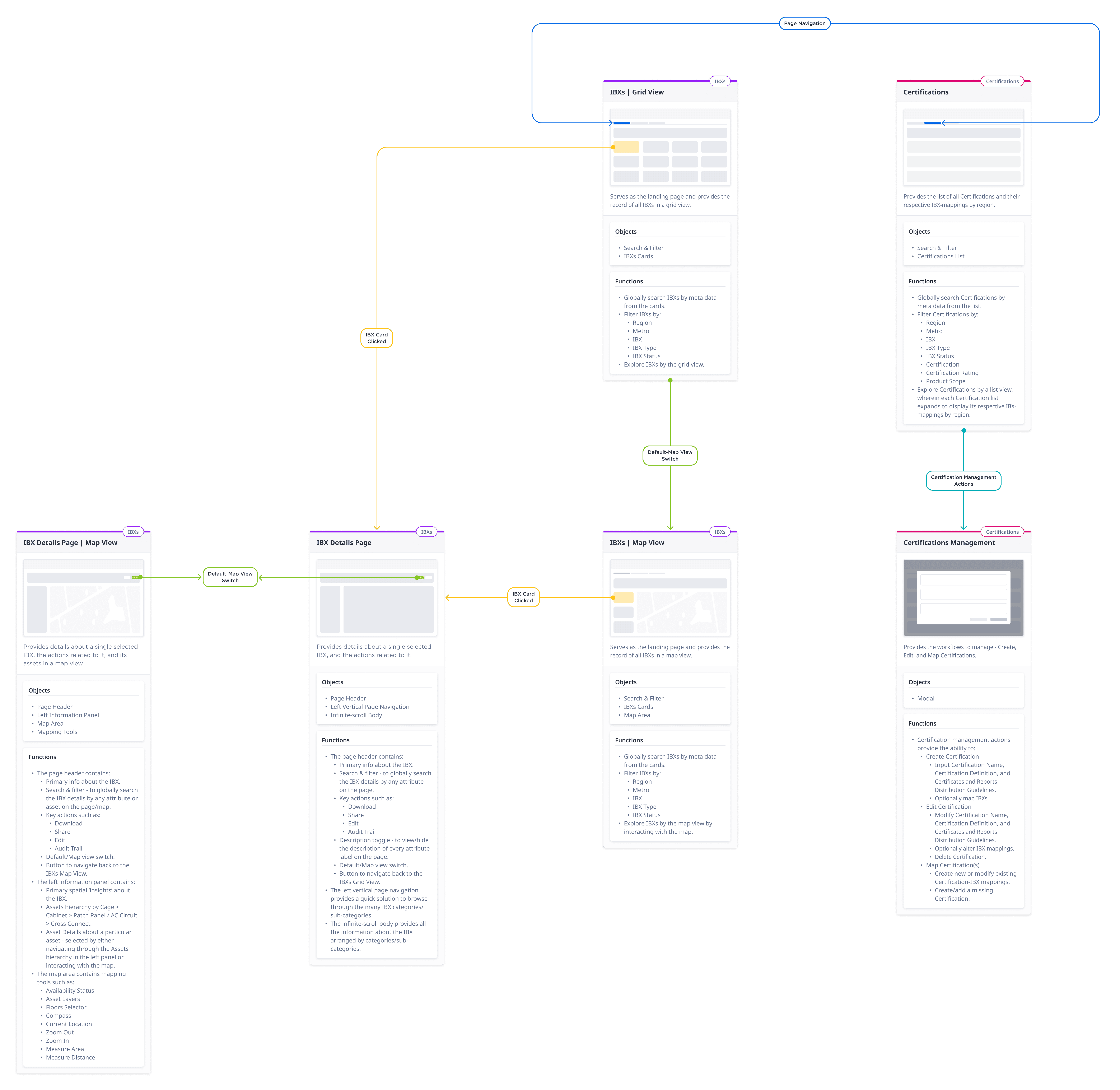
Structured the system as independent modules so it could keep shipping.
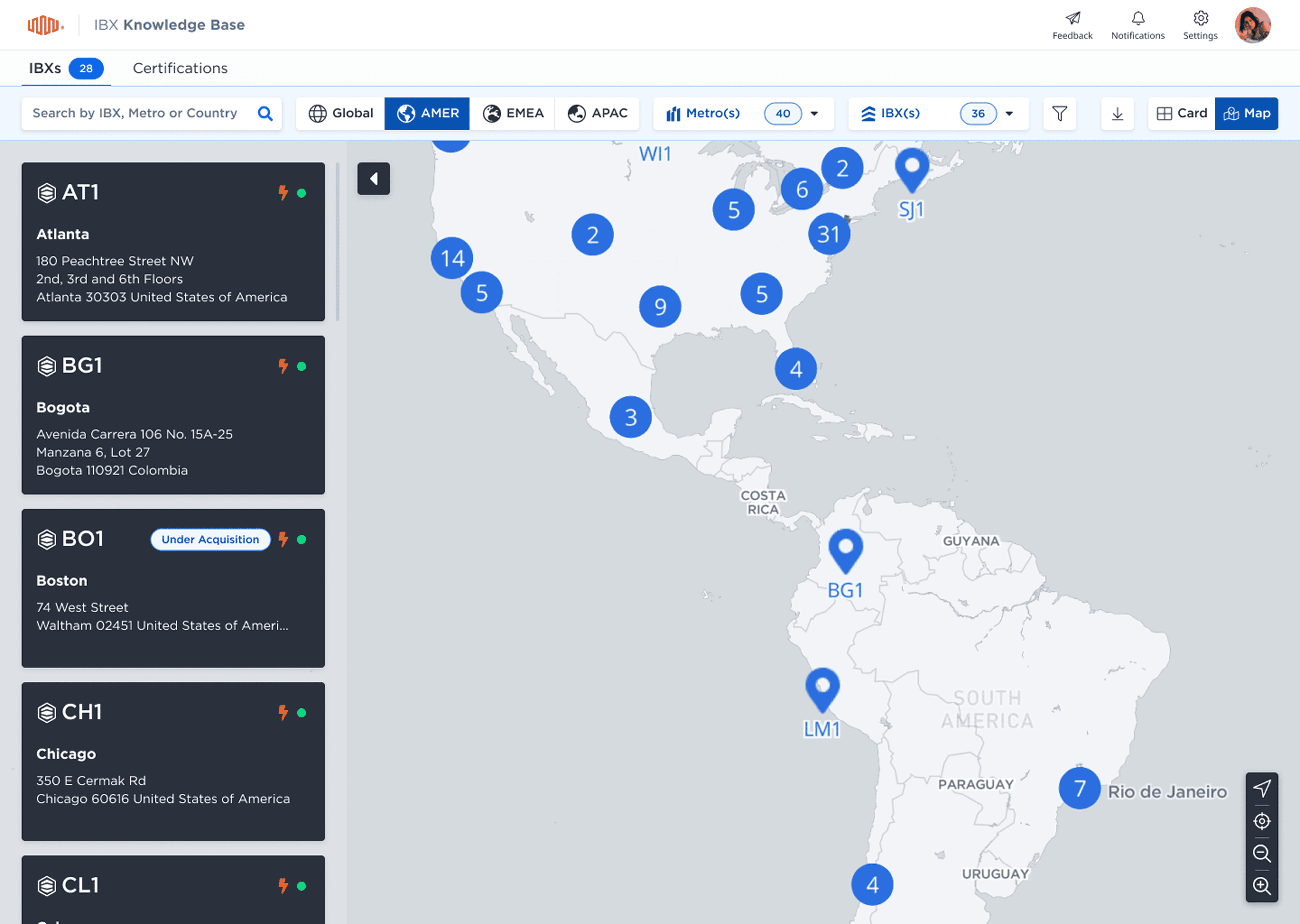
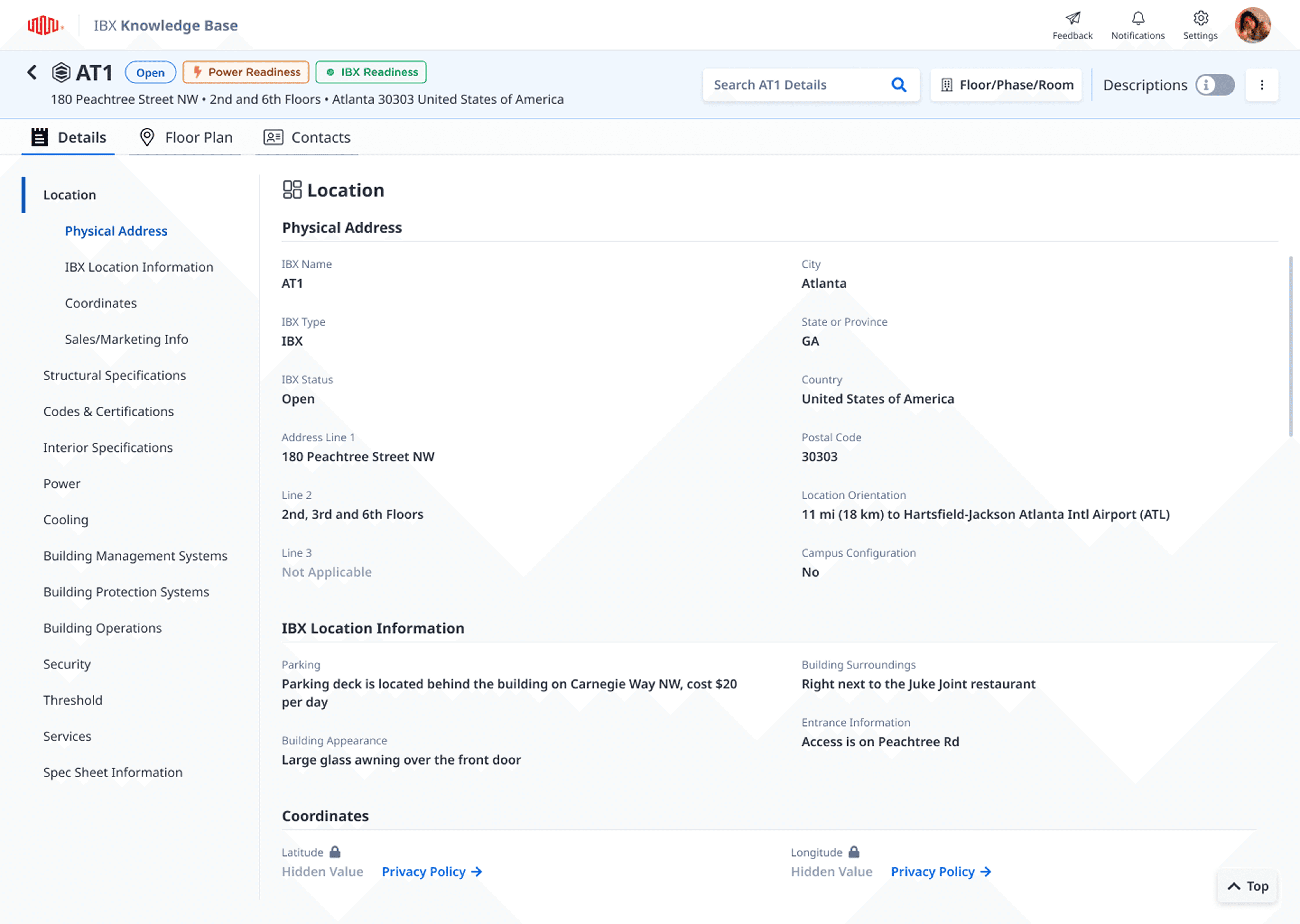
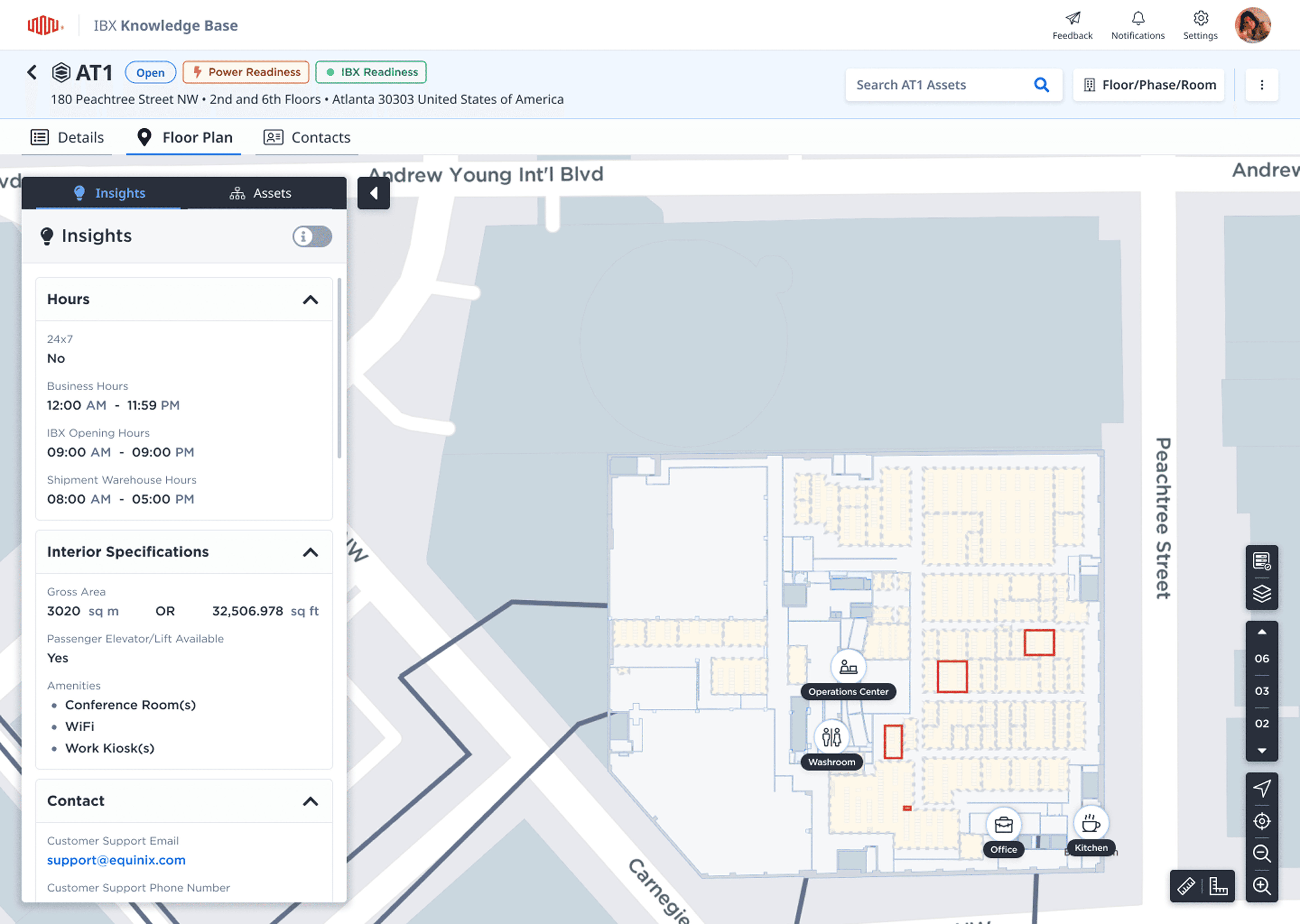
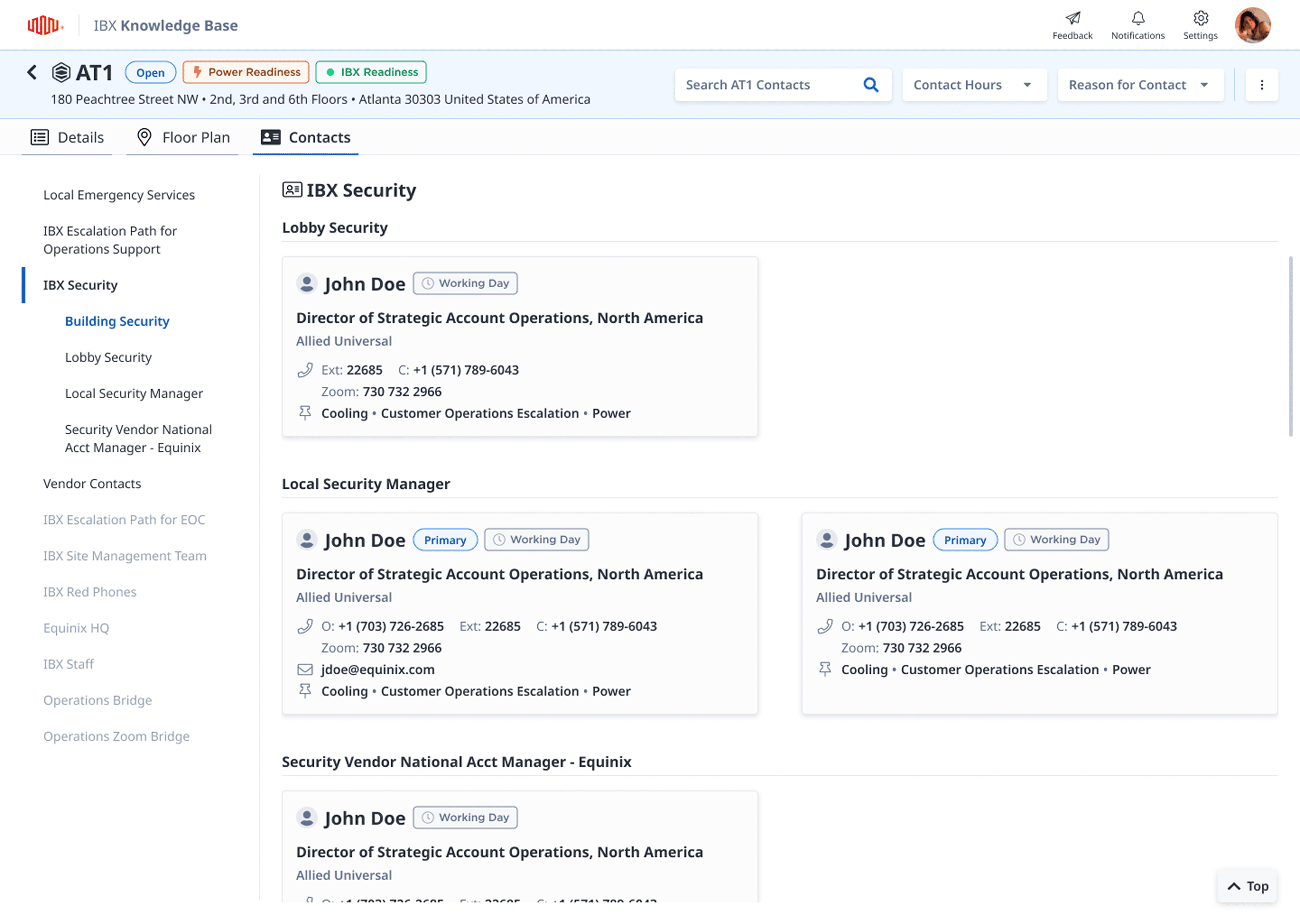
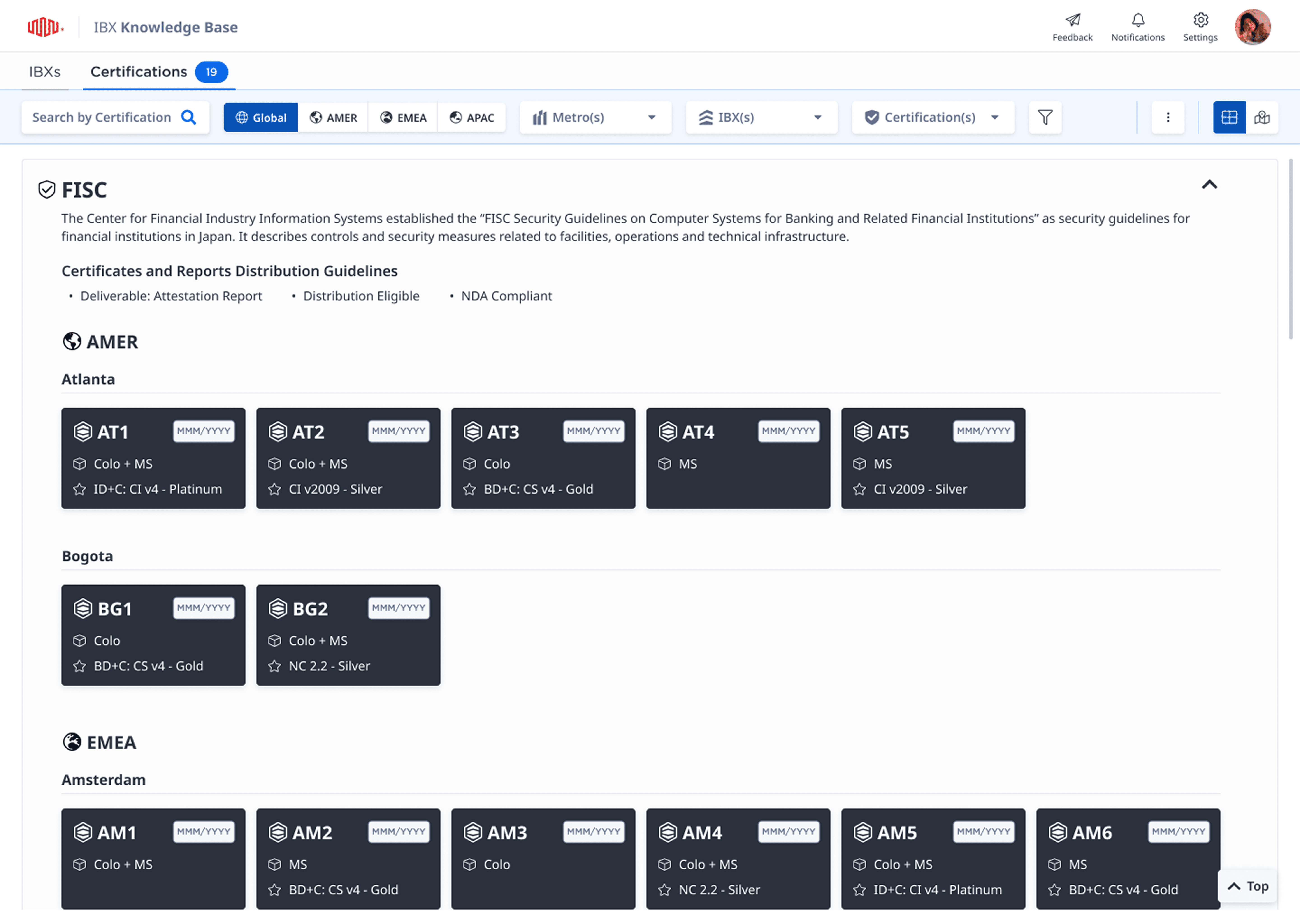
The Knowledge Base was designed as five independent modules: Landing Page, Details, Floor Plan, Contacts, and Certifications. Each had its own workflows and release cycle. Modules could be updated and scaled independently. The 39-sprint rollout was possible because the architecture was built to support it.
Intervention 5
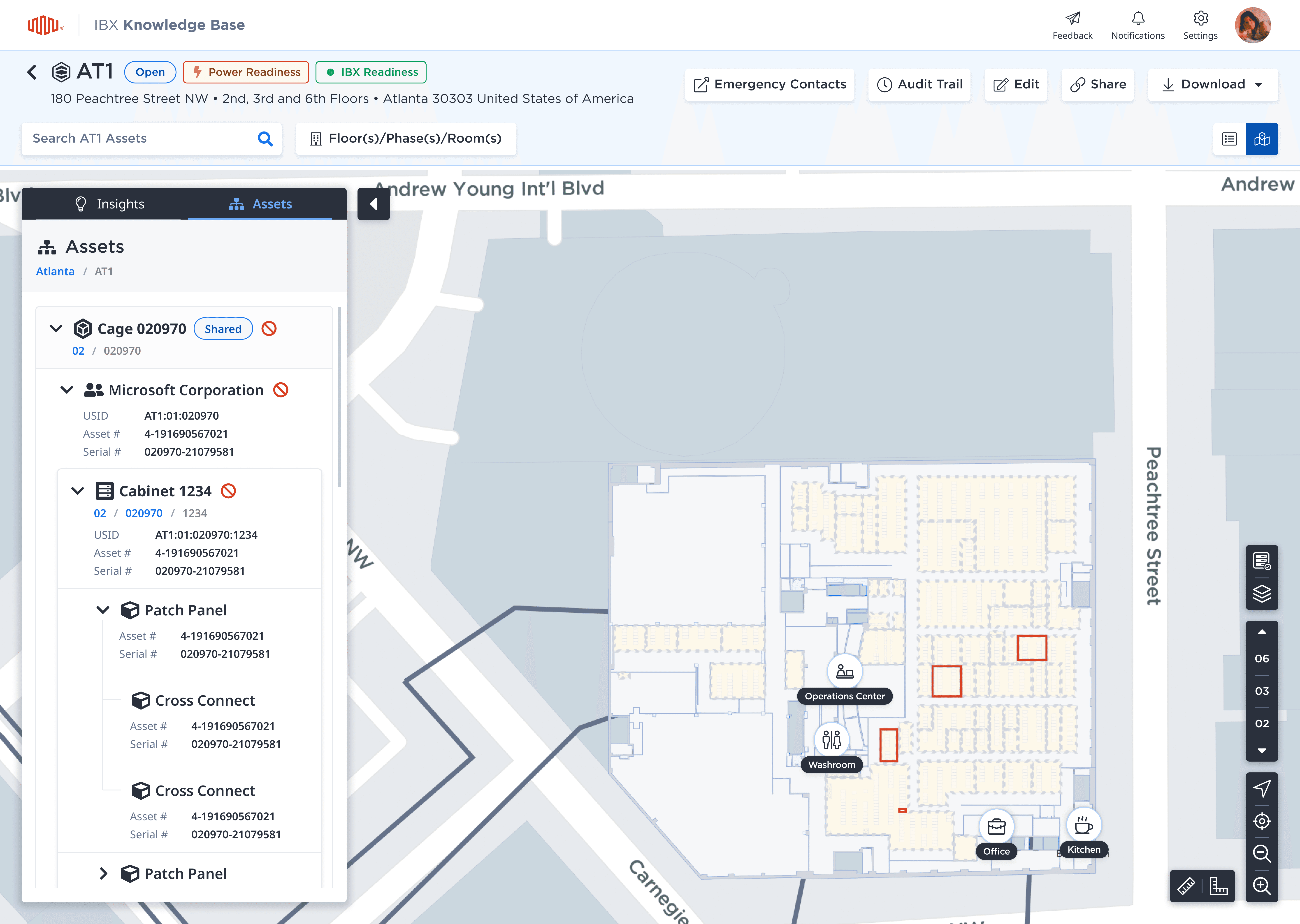
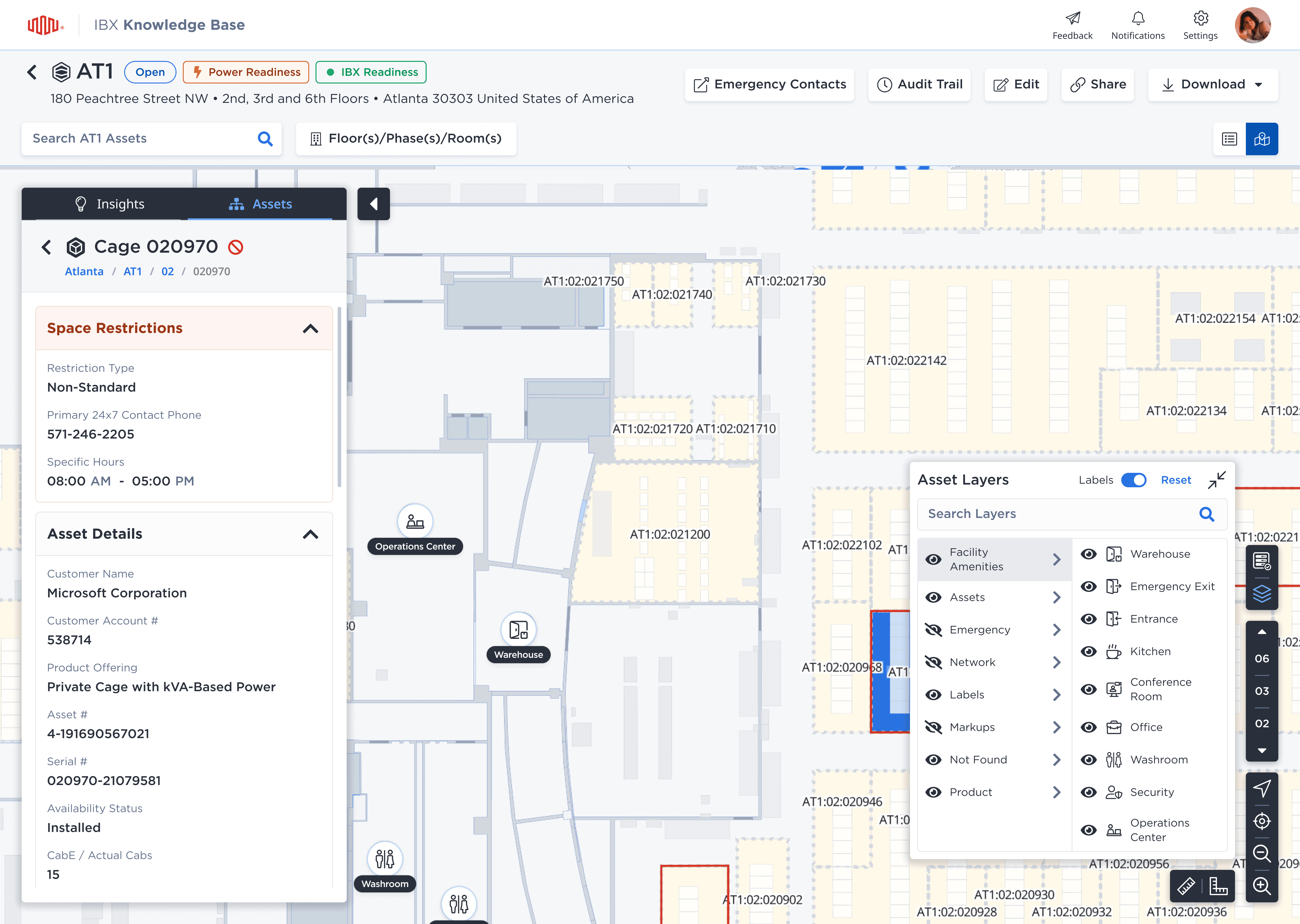
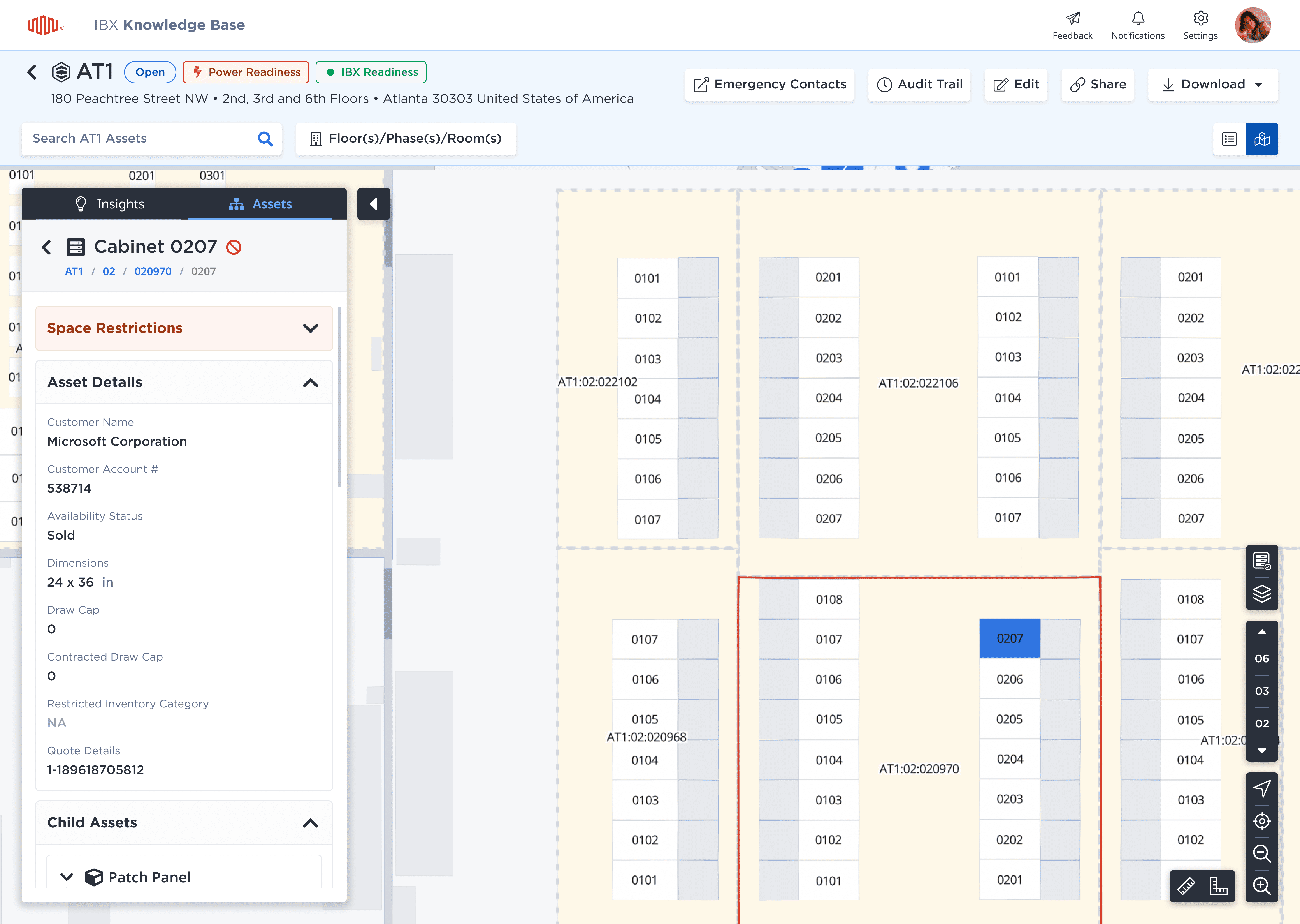
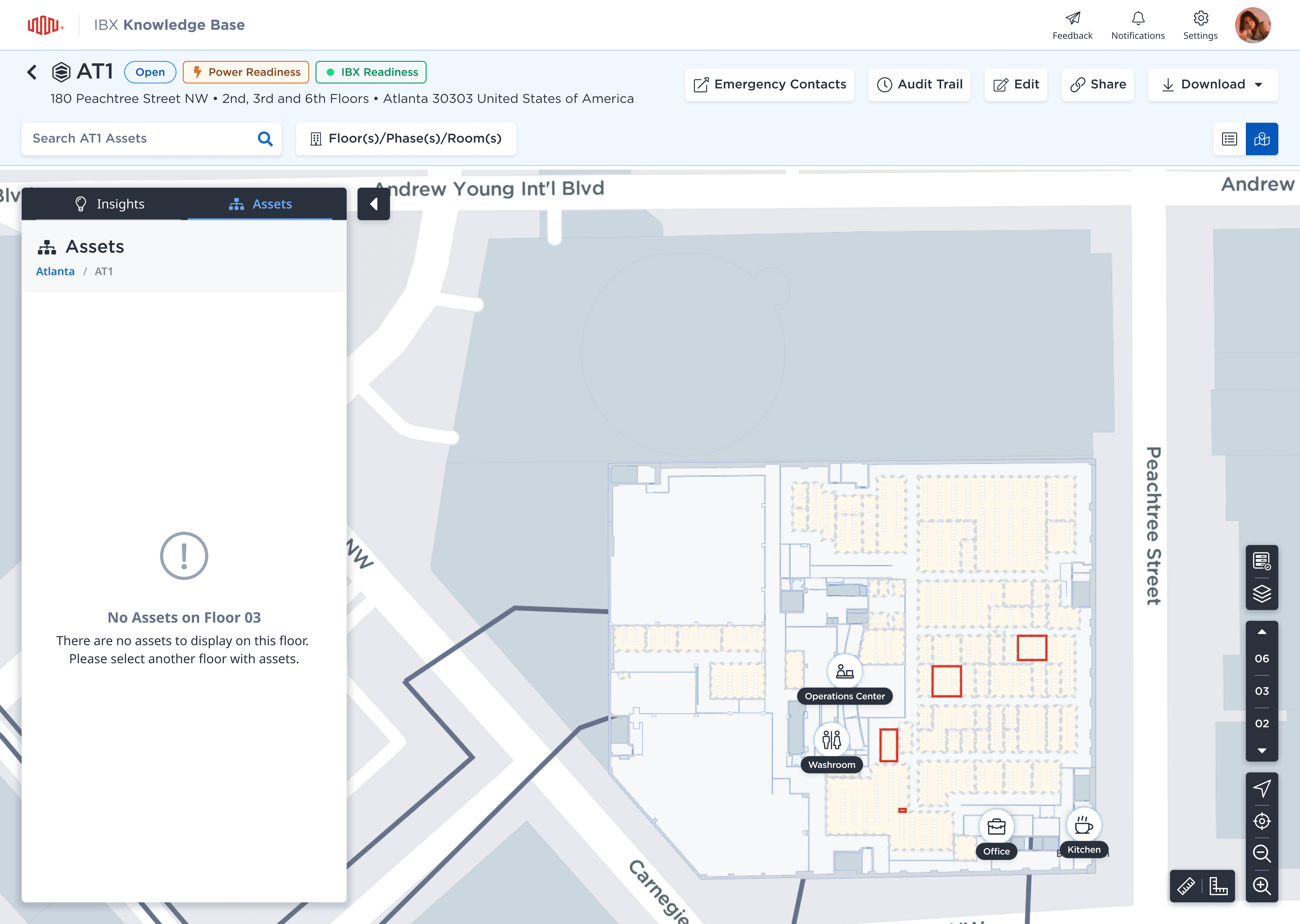
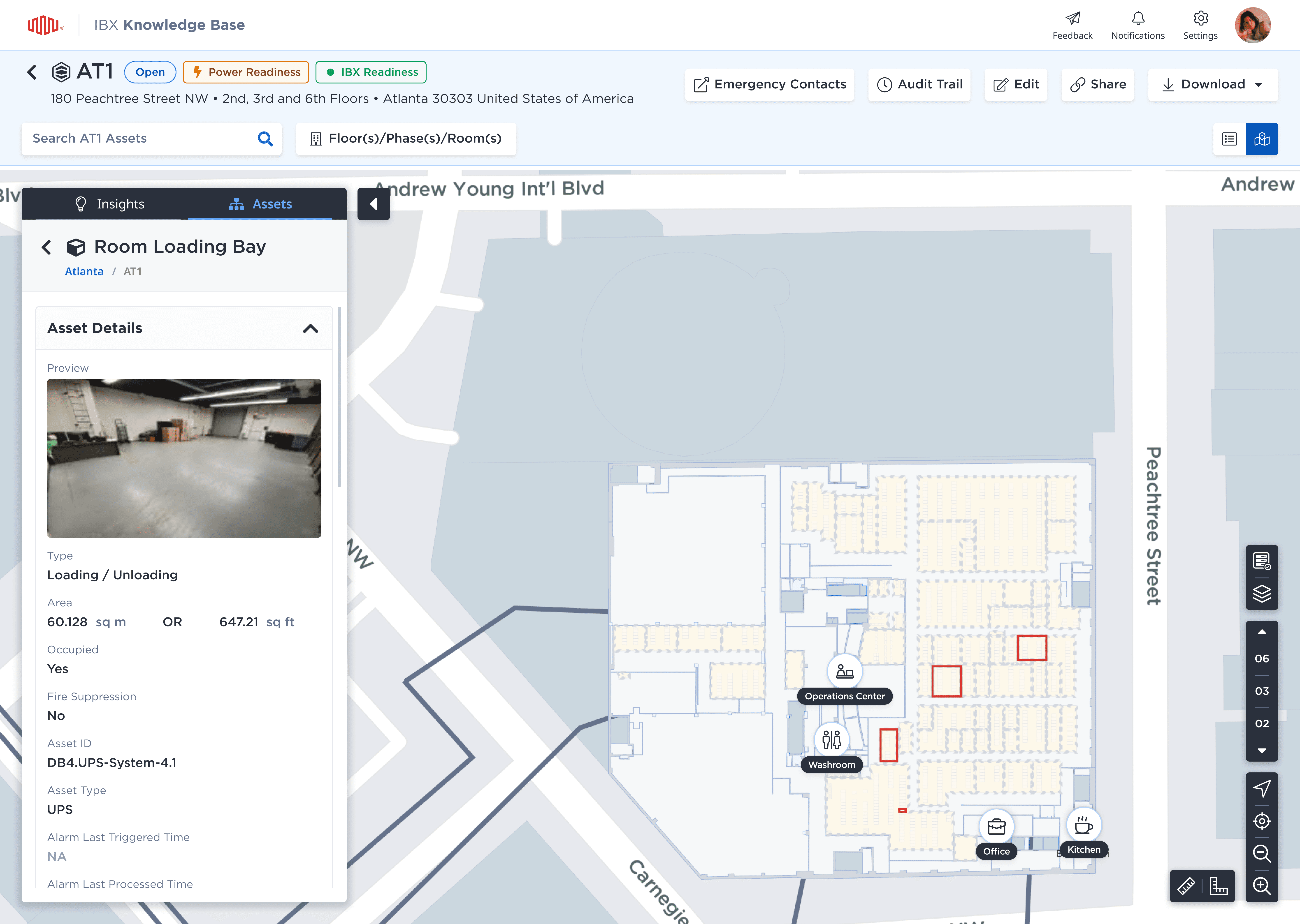
Integrated spatial data into the knowledge base as a native layer.
The Floor Plan module integrated EquiMaps, Equinix's internal spatial platform. I designed the interaction around spatial hierarchy: building → floor → room → asset. Physical infrastructure became a navigable layer of the product, not a detour out of it.