


Problem
Saturday afternoon at Kohl's, March 2019. Marketing in Chicago notices revenue is below target. They call Kohl's tech in Milpitas. Tech calls ZineOne's CPO. A real-time offer takes two hours to go live.
That was the product I was hired to design for. I joined Session AI (then ZineOne) in March 2019 as the founding designer. Series A, a thirty-person team including three founders, $2.5M raised. The ICE platform had been live at major banks and retailers since 2017, with forty-plus use cases at Kohl's and twenty-two million users at HDFC Bank. The technical foundation was solid.
The interface was built by engineers, for engineers. Configuring a campaign meant editing JSON. Marketing managers, the buyers signing the checks, couldn't run the product without engineering.
Takeaway
The technical foundation was solid. The interface assumed users it didn't have.
Reframe
There was no design team before me. No design system. No shared visual language across the product, the pitch deck, and the demo prototypes. Each surface looked like a different company.
UI polish on the platform alone would have moved one surface forward and left the rest behind. The work was scoping the role within the broader gap: design system, product UI, pitch design, demo prototypes, and research practice.
Takeaway
Founding design is not drawing screens faster. It is deciding what the design function is for.
Approach
ZineOne's customers had two kinds of users on the platform. Solutions engineers configured campaigns. Marketing managers ran them. The interface served the first group well, but not the second at all.
The design move was to add a layer, not replace one. Manish Malhotra, Arnab Mukherjee, and Kendra Chen were the partners on product and design direction. A no-code surface for marketing users sat above the platform's full configurability. Engineers kept everything they had. Marketers got a way in.
This decision lets a marketer or campaign operator launch a real-time offer without engineering. Every intervention that followed was a version of it.
Takeaway
A founding designer's first job is choosing what the design abstracts and what it leaves alone.
Logo Wins
Active deployments. Four enterprise customers were running on the platform during my tenure. Kohl's was the flagship, with forty-plus use cases across web, mobile, and store. HDFC Bank ran on the platform for net banking, mobile banking, and wallet services, with 22 million users. Walmart and Williams Sonoma had ML models deployed.
In a separate interview published in Forbes, Debjani described another active customer at the time:
Pilot deals closed. Two more pilots closed during my tenure. Macy's signed in late 2019 to address cart abandonment. L'Oréal also signed in 2019 after a team-built demo.
Seth Jennings, Senior Director of Sales Engineering, wrote in an internal email afterward: "A lot of work went into creating the simulated RTO dashboard as well as the ML artifacts mocks." The demo was well received.
The design did not close these accounts on its own. Sales closed them. The platform earned them. The design was the surface on which every conversation ran.
Takeaway
Founding designer work shows up as the surface that lets the company sell.
•
•
•
•
•
•
Design
Intervention 1
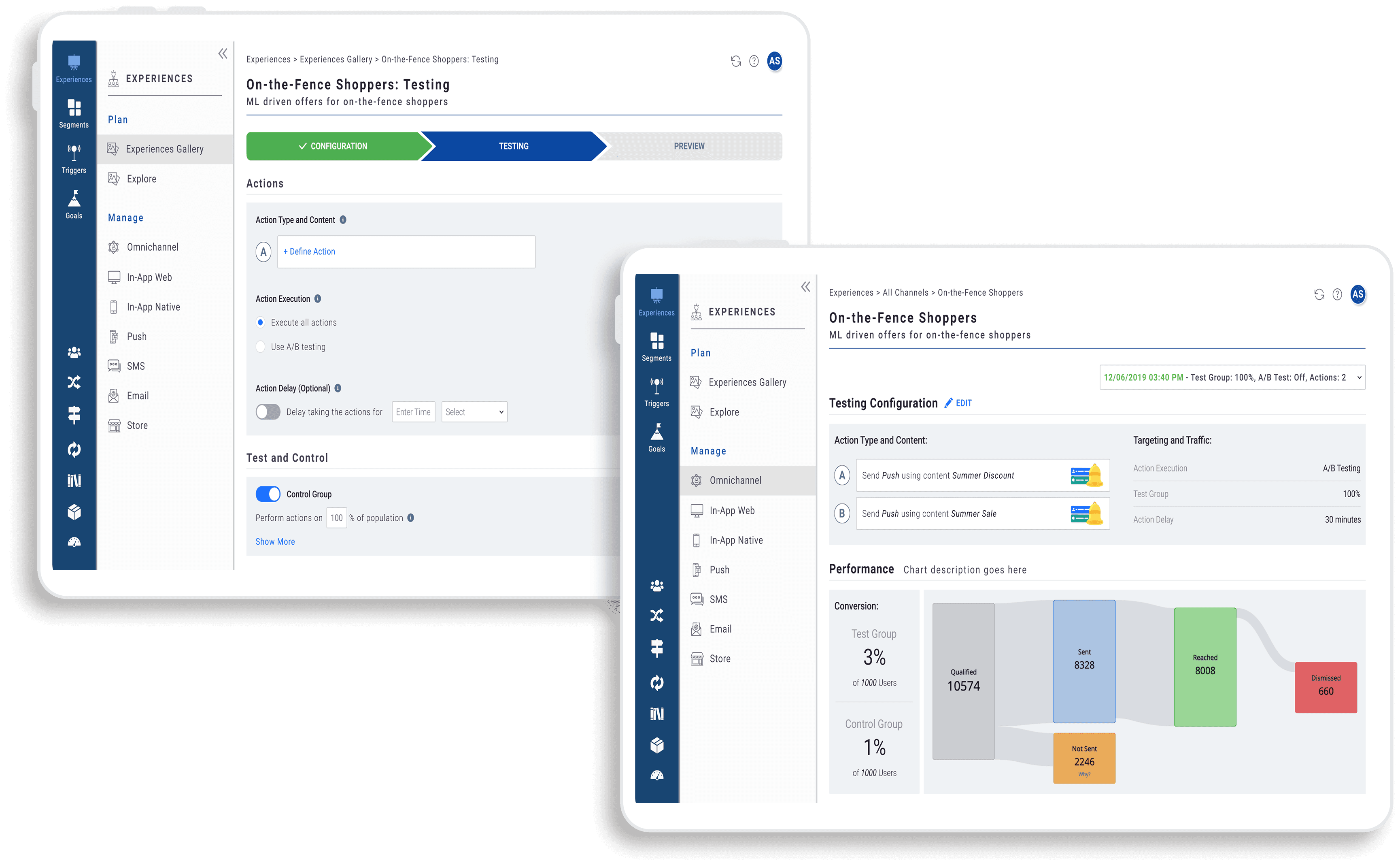
Made campaign configuration usable without engineering.
Designed a modular workflow surface so business users could configure campaigns end-to-end. The platform's full configurability remained accessible to solutions engineers.
Intervention 2
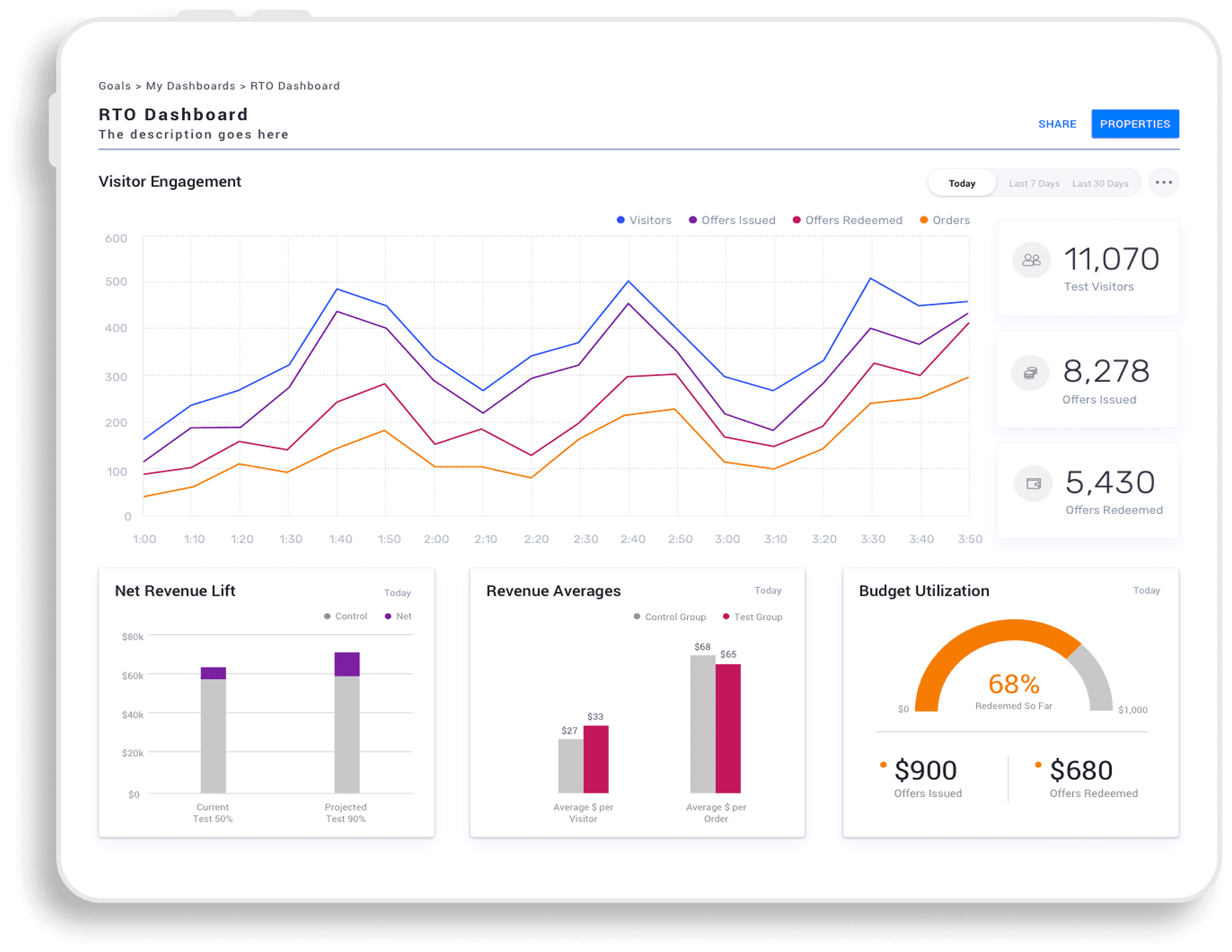
Made campaign performance readable without analyst support.
Designed the in-product reporting so marketing leads could read campaign performance without an analyst translating the numbers.
Intervention 3
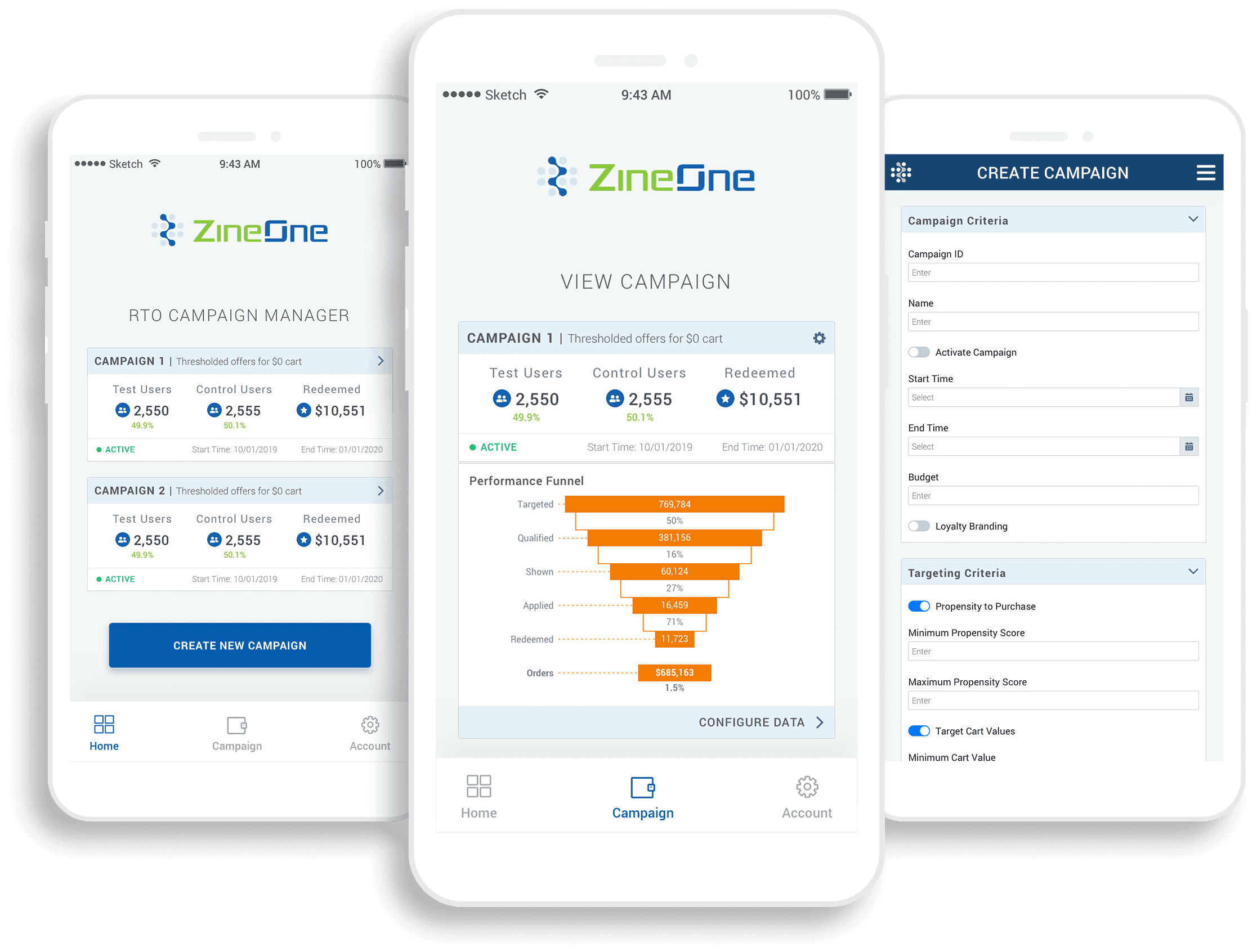
Let marketers launch and manage campaigns without being at a desk.
Designed the iOS app for in-store and weekend decisions. This is the surface that responds directly to the Saturday-afternoon Kohl's scenario. A marketing manager in Chicago can launch, monitor, and pause an RTO from her phone without filing an engineering ticket.
Intervention 4
Created a shared system so the product and pitch spoke the same language.
Built the components, patterns, and visual language from zero. Twenty-five-plus screens shipped across ICE, the RTO dashboards, and the mobile app, all running on it. The pitch decks ran on it as well.
Intervention 5
Established how design worked across product, engineering, and sales.
Introduced the working patterns design needed across functions, from zero: handoff and review with product and engineering, implementation and QA partnership with dev teams, customer-facing collaboration with sales. Founding designer work meant building the operating model alongside the product.